
Hair Salon Profitability 2026: Complete Business Breakdown
QuarkBooker Team
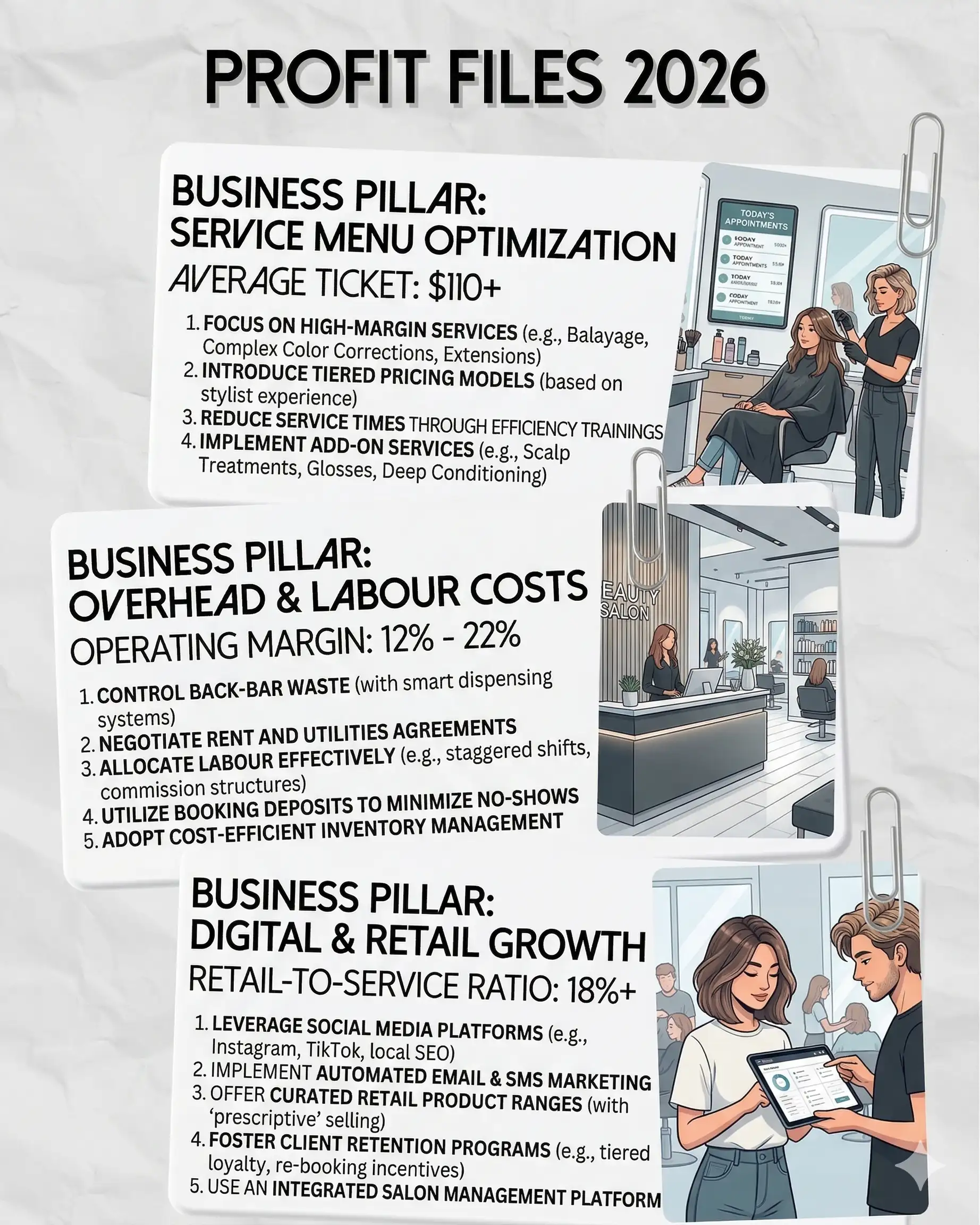
As we move through 2026, the beauty industry has shifted from a post-pandemic recovery phase into a high-tech, service-intensive era. So, how profitable is a hair salon in 2026? On average, a well-managed hair salon typically sees profit margins between 10% and 25%. While rising labor costs and inflation impact the bottom line, salons leveraging automation, high-margin retail, and tiered pricing models are seeing record-breaking net returns. Profitability today depends less on foot traffic and more on client retention, operational efficiency, and the strategic use of AI-driven management tools.
The 2026 Salon Economy: An Overview
The hair and beauty industry has reached a valuation exceeding $600 billion globally, but the "mid-range" salon is under more pressure than ever. In 2026, profitability is bifurcated: luxury boutique salons and high-efficiency "express" concepts are thriving, while those stuck in traditional, manual operating modes are struggling with thin margins.
To understand salon profitability today, we must look at the Revenue vs. Overhead equation. With the cost of professional-grade products rising by 15% over the last two years, owners have had to become "data-first" entrepreneurs.
Key Factors Influencing Salon Profitability in 2026
1. The Shift to Specialized Services
Generalist salons are seeing lower margins compared to those specializing in high-ticket services. Extensions, complex color corrections, and scalp health treatments (a massive trend in 2026) command premium pricing with lower relative material costs. According to Statista, specialized beauty services have seen a 12% year-over-year growth in consumer spending.
2. Labor Costs and the "Suite" Competition
Labor remains the largest expense, typically accounting for 45% to 55% of gross revenue. With the rise of independent salon suites, owners must offer competitive commission structures or high-quality benefits to retain top talent. Efficiently mastering salon operations is essential to ensure that your stylists' chairs are filled during peak hours, minimizing "dead time."
3. Smart Inventory Management
Waste is the silent killer of salon profits. In 2026, top-performing salons use automated inventory tracking to ensure they aren't over-ordering. Reducing back-bar waste by just 5% can increase annual net profit by nearly 2% for a mid-sized establishment.
Breaking Down the Numbers: Revenue vs. Expenses
To determine your potential take-home pay, you need a clear breakdown of the modern salon’s financial structure.
Typical Expense Ratio in 2026
Expense CategoryPercentage of RevenueLabor & Payroll45% - 50%Rent & Utilities10% - 15%Supplies & Color8% - 10%Marketing & Tech5% - 7%Insurance & Misc3% - 5%Net Profit Margin10% - 25%
The Revenue Ceiling
A single-chair salon's revenue is capped by time. To break through this, 2026’s most profitable owners are focusing on Retail-to-Service Ratios. Ideally, retail should account for 15% to 20% of total revenue, as these products often have a 50% profit margin compared to the 20% margin on labor-intensive services.
Maximizing Profit Through Technology
In 2026, the difference between a 10% margin and a 20% margin is often found in the salon's "Tech Stack."
Reducing No-Shows
A single no-show per day can cost a salon upwards of $30,000 a year in lost revenue. Implementing salon booking deposits has become an industry standard to protect the schedule. This ensures that even if a client fails to show, the overhead for that hour is covered.
AI and Automation
The role of the front desk has evolved. Many salons are now using an AI salon receptionist to handle bookings, answer FAQs, and process payments 24/7. This reduces the need for full-time administrative staff, directly boosting the net profit margin.
Modern Marketing: Where to Spend Your Budget
Marketing in 2026 is no longer about "spraying and praying." It is about hyper-local targeting and social proof.
- Short-form Video: Platforms like TikTok and Instagram remain dominant for visual transformations.
- Regional Trends: For owners in specific markets, understanding the top social media platforms for UAE salons or other local hubs is critical for capturing high-intent traffic.
- Retention Marketing: It costs 5x more to acquire a new client than to keep an existing one. Automated SMS and email flows for "we miss you" campaigns are the highest-ROI activities you can perform.
According to a report by IBISWorld, salons that invest in digital loyalty programs see a 20% higher visit frequency than those that do not.
Strategies to Increase Your Salon’s Profit Margin
If your current margins are sitting below 15%, consider these three aggressive adjustments:
1. Implement Dynamic Pricing
Much like airlines or hotels, some salons in 2026 are experimenting with "peak" and "off-peak" pricing. Charging a premium for Saturday morning appointments while offering slight incentives for Tuesday afternoons can balance your workload and maximize revenue per hour.
2. Focus on "Skinification" of Hair
The "Hair Spa" concept is a major revenue driver this year. Scalp treatments, deep conditioning masks, and anti-pollution rinses are low-labor, high-margin add-ons. They require little extra time but add $30–$75 to the average ticket price.
3. Optimize Your Floor Space
Is every square foot of your salon generating income? If you have an empty corner, consider adding a retail display or a "selfie station" that encourages social media tagging, which acts as free organic marketing.
The Risks: What Could Hurt Your Profits?
While the outlook is positive, 2026 presents unique challenges:
- Inflationary Pressure: Professional supply costs are volatile. Review your service menu pricing at least twice a year.
- Energy Costs: High-intensity lighting and constant laundry usage make salons energy-heavy. Investing in energy-efficient dryers and LED lighting is no longer optional—it's a financial necessity.
- Talent Drain: The "gig economy" continues to pull stylists toward independent booth renting. To stay profitable, salon owners must build a culture that provides more value than a stylist could get on their own (e.g., continuous education and advanced marketing support).
FAQ: Salon Profitability in 2026
What is a good profit margin for a hair salon?
A healthy profit margin in 2026 ranges from 15% to 25%. While some high-end boutiques reach 30%, most well-run salons aim for 20% after all expenses, including the owner's salary and taxes, are accounted for.
How can I increase my salon's revenue without adding more chairs?
Focus on increasing the Average Ticket Value (ATV). You can achieve this by training staff on retail upselling, introducing high-margin add-on treatments like scalp exfoliation, and implementing a slight price increase for your most popular stylists.
Is it still profitable to own a hair salon with the rise of salon suites?
Yes, but the business model must offer something suites cannot: a unified brand experience, superior team-based customer service, and high-end amenities. Profitability now comes from creating a "destination" rather than just a place for a haircut.
How much should I spend on marketing for my salon?
Typically, salons should allocate 5% to 7% of gross revenue to marketing. In 2026, this budget should be split between social media content creation, local SEO, and automated retention tools that reduce client churn.
Conclusion: The Path to a Profitable 2026
Profitability in the hair salon industry remains strong for those willing to adapt to a digital-first world. By focusing on specialized services, maintaining a tight grip on overhead through automation, and prioritizing client retention, salon owners can enjoy a lucrative and sustainable business.
The most successful owners today are moving away from manual spreadsheets and "pen and paper" booking. Modern salons often use comprehensive booking and management platforms to automate operations, manage staff commissions, and significantly reduce no-shows.
Ready to professionalize your salon's operations? Register your business today and take the first step toward a more profitable 2026.