Salon Management Trends 2026: The New Operational Standard
QuarkBooker Team
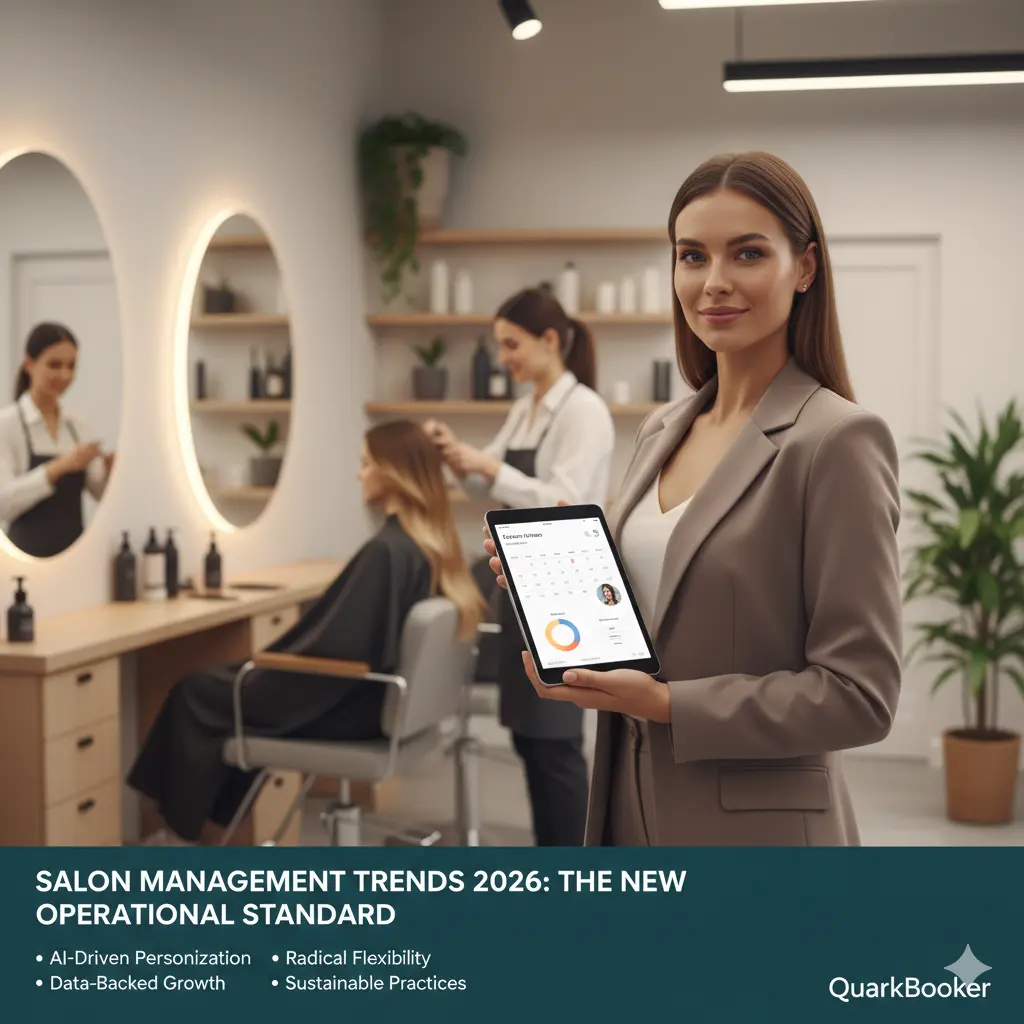
Salon Management Trends in 2026: What Serious Owners Must Prepare For
The year 2026 marks the end of "business as usual" for the beauty industry. The gap between salons that are thriving and those that are barely surviving has never been wider.
Today, success isn't just about the quality of the balayage or the precision of the cut; it’s about operational maturity. Serious salon owners are no longer competing just with the salon down the street—they are competing with the digital convenience and hyper-personalization that clients now expect from every luxury brand.
1. Data-Driven Personalization (The "Phygital" Shift)
In 2026, personalization is no longer just remembering a client's name. It’s about anticipating needs through data. High-end salons now utilize digital pre-consultations where clients provide hair history and goals before they arrive.
This shift reduces service variability and waste. According to research from the MIT Sloan Management Review, integrating digital data into service workflows significantly reduces human error and improves client satisfaction.
2. Radical Flexibility and Staff Retention
The labor market in 2026 has permanently moved away from "grind culture." To keep top talent, owners must replace 10-hour shifts with structured flexibility.
- Career Pathing: Stylists stay where they see a future.
- Predictability: Professionals want to know their schedule weeks in advance without last-minute changes.
Workplace studies from Gallup show that employee engagement is highest when expectations are clear and schedules are predictable. To achieve this, many salons are moving away from verbal promises and using a free salon staff contract PDF to anchor their professional relationships.
3. The Automation of the "Front Desk"
As labor costs rise, the traditional full-time receptionist role is evolving. Serious owners are moving toward AI-integrated systems that handle 24/7 bookings, deposits, and reminders.
- Frictionless Booking: If a client cannot book in under 60 seconds, they will go elsewhere.
- Operational Stability: Systems enforce cancellation policies and deposit requirements automatically, removing the "awkward" emotional conversations from the owner's plate.
This is why luxury brands consistently outgrow basic booking tools and transition to more robust infrastructure.
4. Objective, System-Enforced Culture
In 2026, "culture" isn't a vibe—it's a system. Owners have realized that verbal staff agreements lead to inconsistency and favoritism, which destroys team morale.
According to employer best practices from SHRM, documentation is the key to reducing workplace friction. When rules live in a system rather than the owner's head, the environment becomes fair and stable.
The 2026 Strategy: Move from Reactive to Proactive
Serious owners don't wait for a crisis to fix their operations. They build a foundation that scales.
If you are ready to move from manual guesswork to a data-driven, professional salon enterprise: 👉 Discover the QuarkBooker System