
Salon Opening & Staff Duties Checklist for Daily Operations
QuarkBooker Team
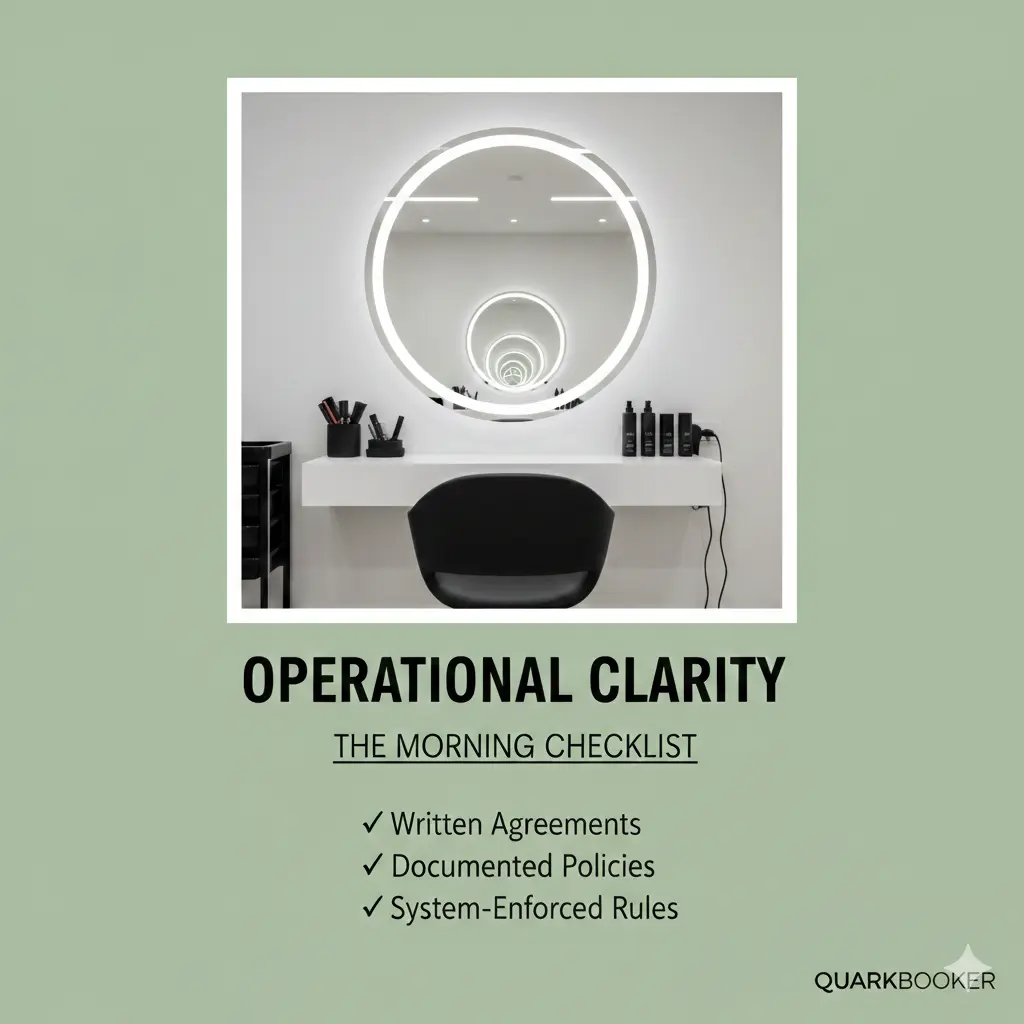
The Gold Standard Salon Opening: A Checklist for Operational Excellence
A salon’s day doesn’t start with the first client—it starts with the first process.
In high-performing salons, mornings are structured, repeatable, and calm. In struggling salons, mornings are reactive—supplies are missing, rooms are unprepared, and staff are forced to improvise. The difference isn't the experience level of the team; it is the presence of a documented daily opening checklist.
Professional salons never rely on memory to start the day; they rely on operational routines.
Why Morning Structure is the Backbone of Your Brand
When opening routines are informal, small failures accumulate into structural friction. Standardized opening procedures are proven to improve consistency and reduce service errors in appointment-based businesses.
Structure in the first 30 minutes often determines the quality of the next 10 hours. To achieve this, professional salons follow a simple principle: Opening is a system, not a habit.
1. The Operations Layer: Facility Readiness
This layer ensures the environment is "client-ready" before the doors even unlock.
- Facility Preparation: Inspect premises, set climate control, and initialize POS systems.
- Safety & Hygiene: Verify sanitation stations and confirm tool sterilization cycles are complete.
- Compliance: Following documented daily preparation routines ensures your salon stays aligned with safety standards and general hygiene frameworks.
2. The Team Layer: Explicit Staff Duties
Mornings become noisy and inefficient when duties are unclear. Each staff member must know their startup responsibilities without needing to ask the owner.
- Workstation Setup: Sanitize personal surfaces and prepare service supplies.
- Schedule Review: Review personal appointments and confirm special client notes.
- Accountability: Duties should be assigned explicitly rather than socially to foster a disciplined team culture.
3. The Revenue Layer: Supply & Service Readiness
Delays often stem from missing supplies rather than a lack of skill. Pre-opening inventory checks significantly reduce same-day service disruptions.
- Stock Verification: Ensure core service products and disposables are fully stocked.
- Retail Organization: Organize retail shelves to maximize visual appeal for incoming clients.
4. The Control Layer: Schedule Verification
Professional salons verify the day’s schedule before the first appointment begins. This prevents the "domino effect" of delays.
- Conflict Resolution: Identify double-bookings or unrealistic service durations early.
- Resource Mapping: Confirm staff assignments and flag special service requirements.
Modern salons rely on structured booking infrastructure rather than message threads to maintain this control. As businesses scale, they often find they outgrow basic booking setups in favor of these more robust systems.
The Psychology of the Checklist
Some owners fear that checklists feel "too strict." However, operational psychology suggests the opposite: checklists reduce cognitive load and improve confidence. When expectations are written, staff are more relaxed, errors drop, and the team operates with a calmer, unified focus.
Implementing Your Professional System
High-maturity salons don’t keep checklists buried in folders. They make them operational by:
- Making them visible: Print them or use digital tracking.
- Assigning by role: Ensure everyone knows their specific contribution.
- Regular Review: Update the system as the salon grows.
If your salon is ready to move from reactive management to a structured, system-driven daily operation: 👉 Explore the QuarkBooker System