
Top Salon Rules for Better Client Management & Scheduling
QuarkBooker Team
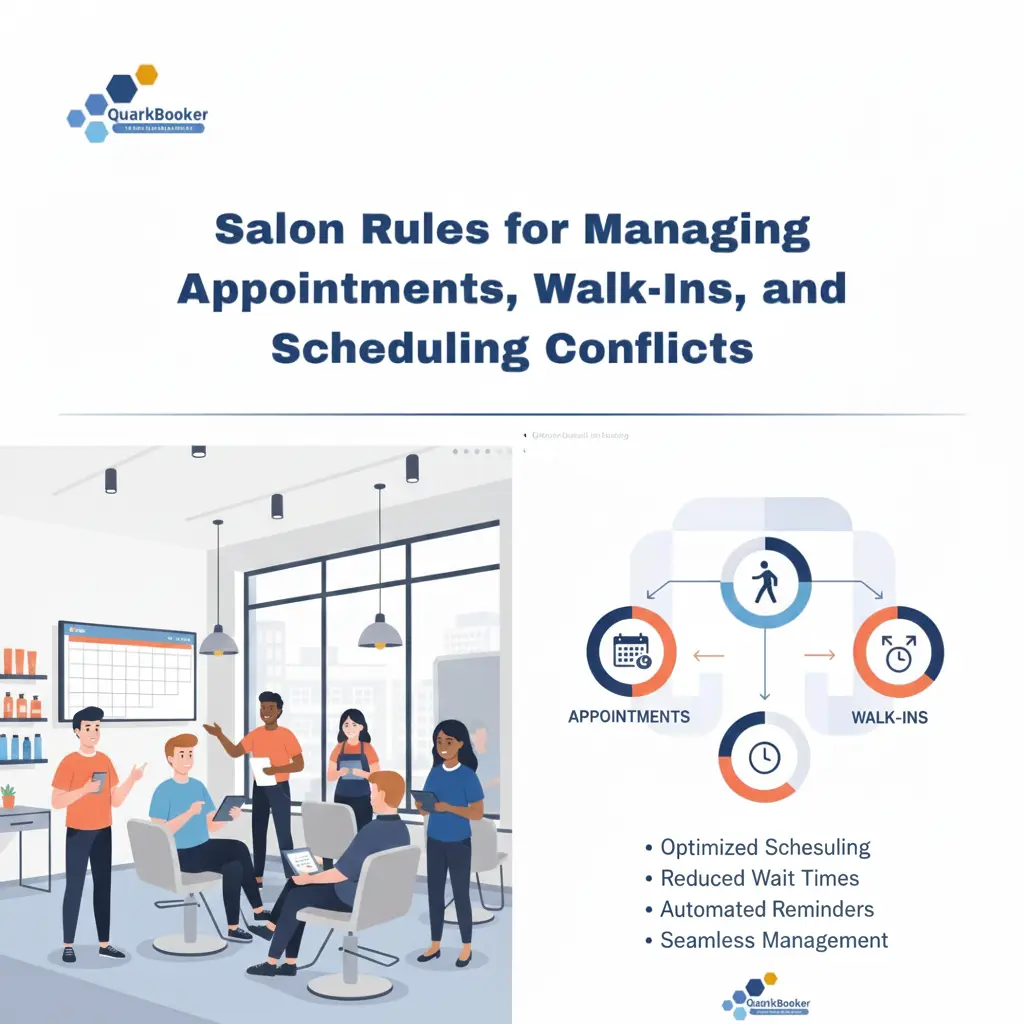
Running a successful salon is about more than just cutting hair and applying color. Behind every thriving beauty business is a well-oiled scheduling machine that keeps clients happy, stylists productive, and the day flowing smoothly. But managing appointments, handling walk-ins, and dealing with scheduling conflicts can quickly turn into chaos without the right systems in place.
That's where solid salon rules come in. Think of them as your operational backbone, the invisible structure that keeps chaos at bay and ensures every client feels valued. Having clear policies for scheduling is essential for balancing customer satisfaction with business efficiency.
Why Salon Rules Matter
You might worry that strict policies will turn clients away, but the opposite is actually true. When clients know what to expect, they feel more secure and respected. Your team also benefits from clear guidelines, no more second-guessing decisions or feeling caught between pleasing clients and following unspoken policies.
Good salon rules create consistency, reduce misunderstandings, and protect your bottom line. They help you avoid nightmare scenarios: double-booked appointments, stylists running hours behind, walk-ins disrupting your schedule, and dreaded no-shows that cost you money.
Smart Appointment Management
Your booking system is where everything begins, and getting it right sets the tone for the entire client experience.
Booking Policies That Work
First, require contact information for every appointment: phone number and email at a minimum. This allows you to send confirmations and reminders, which can reduce no-shows by up to 30%. With Quarkbooker, these reminders are fully automated, sent 24–48 hours before each appointment without any manual effort.
Your salon rules should also establish minimum advance booking times. Consider requiring at least 2–4 hours’ notice for same-day bookings to avoid throwing off your entire day. Quarkbooker makes this easy by allowing you to customize booking windows and control how far in advance clients can schedule.
Make booking simple by using tools like Quarkbooker where clients can even book directly from your website or Instagram page, reducing friction and increasing convenience.
Document everything in client profiles: special requests, product allergies, preferred stylists, and service history. Quarkbooker’s built-in client management tools store all this information in one place, transforming a transactional appointment into a personalized, loyalty-building experience.
Cancellation and No-Show Policies
Allow clients to reschedule up to 24 hours before their appointment without penalty. This gives you time to fill that slot. For cancellations, require 24-48-hour notice. If clients cancel with less notice, charge a cancellation fee, typically 50% of the service cost.
For no-shows, your salon rules should be crystal clear. Many successful salons charge 50-100% of the service price, or require a deposit for all future bookings from that client. Some salons track repeat offenders and require deposits after two no-shows or late cancellations. This protects your business and respects your stylists' time.
The Deposit Strategy
Consider requiring deposits for first-time clients, extensive services, or appointments over a certain dollar amount. A 25-50% deposit is typical and reasonable. Make these deposits non-refundable but transferable to rescheduled appointments. This protects you from no-shows while offering clients flexibility.
Walk-Ins
Walk-ins can be a blessing or a curse, depending on how you handle them. They represent potential revenue but can also disrupt your carefully planned schedule. Your salon rules need to strike a delicate balance.
Setting Clear Walk-In Expectations
Be transparent about your walk-in policy. Display signage clearly in your salon and communicate it on your website and social media. When a walk-in arrives, assess your current schedule, check stylist availability, and consider the service requested. Be honest about wait times; clients appreciate transparency over false optimism.
Maintain a walk-in waiting list with contact numbers. Text clients when you're ready so they can grab coffee or run errands instead of crowding your waiting area.
Service Limitations for Walk-Ins
Reserve certain services exclusively for appointments. Complex color corrections, extensions, and keratin treatments should require advance booking. Instead, offer express services designed for walk-ins: quick cuts, blowouts, bang trims, and simple updos.
Consider capping walk-in service duration at 45 minutes to an hour to maintain schedule integrity. If a walk-in requests something longer, offer to book them for a future appointment.
The Priority Question
Your salon rules must be clear: scheduled appointments always take priority over walk-ins. Booked clients planned ahead and deserve respect. If accepting a walk-in would delay a scheduled appointment, politely decline or offer a later time.
Smart scheduling includes buffer times between appointments, a 15-minute buffer between major services gives you flexibility to accommodate quick walk-ins. Some salons assign specific stylists to handle walk-ins when fully booked, or implement walk-in hours during slower periods.
Read More on 9 Common Mistakes Salon Owners Make
Handling Scheduling Conflicts
Even with the best salon rules in place, scheduling conflicts happen. How you handle them determines whether a client becomes a loyal regular or never returns.
Preventing Double-Bookings
Use a centralized booking system that all staff can access in real-time. Cloud-based salon software like Quarkbooker eliminates the confusion of multiple people managing the schedule simultaneously. Block out lunch breaks, meetings, and personal time in the schedule. Build in 10-15 minute buffers between appointments for wiggle room.
When Double-Bookings Happen
When two clients show up for the same time slot, own it immediately. Contact both with a sincere apology and offer alternatives: a different time slot on the same day, your next available appointment, or a different stylist. Provide compensation: complimentary add-ons, product discounts, or priority booking.
The Late Client Dilemma
Your salon rules should establish a grace period, typically 10-15 minutes. If a client arrives more than 15 minutes late, assess whether you can complete the full service without affecting the next appointment. If not, offer a modified service or reschedule. Many salons treat arrivals 20+ minutes late as cancellations with applicable fees.
Communicate these policies at booking and in confirmation messages.
When Your Stylist Is Running Behind
Notify waiting clients immediately about delays with realistic updated wait times. Offer refreshments, magazines, or the option to reschedule without penalty. For delays over 30 minutes, consider offering compensation like 10% off or a complimentary add-on service.
Staff Scheduling
Great salon rules extend to how you manage your team's schedules.
Managing Stylist Availability
Require stylists to submit availability schedules at least two weeks in advance. When personal time off gets approved, immediately block it in the system. Establish clear protocols for emergency time-off requests.
Cross-training is invaluable when multiple stylists can perform popular services, and you have backup coverage when someone's unavailable.
Standardizing Service Times
Set standard service duration times for consistency—women's cut: 45 minutes, men's cut: 30 minutes, full highlights: 2.5 hours. Allow stylists to adjust for complex situations, but standards should cover most appointments. Always include consultation and styling time.
That 10-15 minute buffer between major services gives stylists time to clean up, prepare, and take breaks. Burning out your team with back-to-back appointments leads to poor service quality and high turnover.
Discover Why Beauty Salon Software is the Secret Weapon of Modern Salon Owners
Communication
All the salon rules in the world won't help if you don't communicate them effectively.
Setting Client Expectations
Respond to booking inquiries within 2-4 hours during business hours. When clients book, confirm the appointment with key information: date, time, stylist name, services, estimated duration, and pricing. Include relevant policies like cancellation terms and late arrival consequences.
Be transparent about pricing, timing, and service limitations. If a client requests a dramatic color change, be honest about whether it requires multiple appointments. Managing expectations builds trust.
Leveraging Technology
Modern salon management software like Quarkbooker makes your salon rules work seamlessly. With features such as real-time online booking, automated confirmations and reminders, integrated payment processing, client history tracking, and smart reporting, Quarkbooker helps you run your salon more efficiently.
The right technology reduces no-shows through automatic reminders, prevents double-booking, collects deposits effortlessly, and provides data to optimize your schedule. Quarkbooker also makes it easy to share your salon rules by linking them directly within your booking page, ensuring clients know your policies before scheduling.
Post your salon rules on your website, Instagram bio, and Facebook page so clients clearly understand your policies before booking.
The Human Element: When to Bend the Rules
Here's the paradox of good salon rules: you need to know when to break them. Policies provide structure, but rigidity alienates people.
If a loyal client who's never missed an appointment has a genuine emergency and cancels last minute, waiving the fee once might be the right call. If a first-time client seems nervous about your deposit policy, explaining why it exists usually resolves concerns.
Your salon rules should empower your team to make good decisions, not lock them into robotic responses. Train staff on policies, but also on when exceptions make sense. The goal is consistent professionalism with room for human judgment.
Measuring Success and Making Adjustments
Track the effectiveness of your salon rules by monitoring no-show rates, cancellation rates, average wait times, client retention, and revenue per appointment slot. This data reveals whether your policies work or need refinement.
Collect feedback from clients and staff. Your team has valuable insights into what's working and what's causing frustration. Review your policies quarterly and make data-driven adjustments. The salon industry evolves, and what worked last year might need tweaking today.
Creating Your Salon Rules
Effective salon rules are about creating a professional environment where clients feel valued, stylists can do their best work, and your business thrives.
Start by documenting your current practices and identifying gaps or confusion. Get input from your team about what policies would make their jobs easier. Look at your data to see where you're losing money or time.
Then write down your salon rules clearly and simply. Train your entire team on them. Communicate them to clients through multiple channels. Enforce them consistently but compassionately.
Remember, these policies are the foundation that allows you to serve them better. When everyone knows the rules, appointments run smoothly, conflicts get resolved fairly, and your salon becomes known for professionalism and reliability.
That's the real beauty of good salon rules: they create freedom within structure, allowing you to focus on what you do best, which is making people look and feel amazing.