
Salon Rules & Legal Guidelines for Staff and Clients
QuarkBooker Team
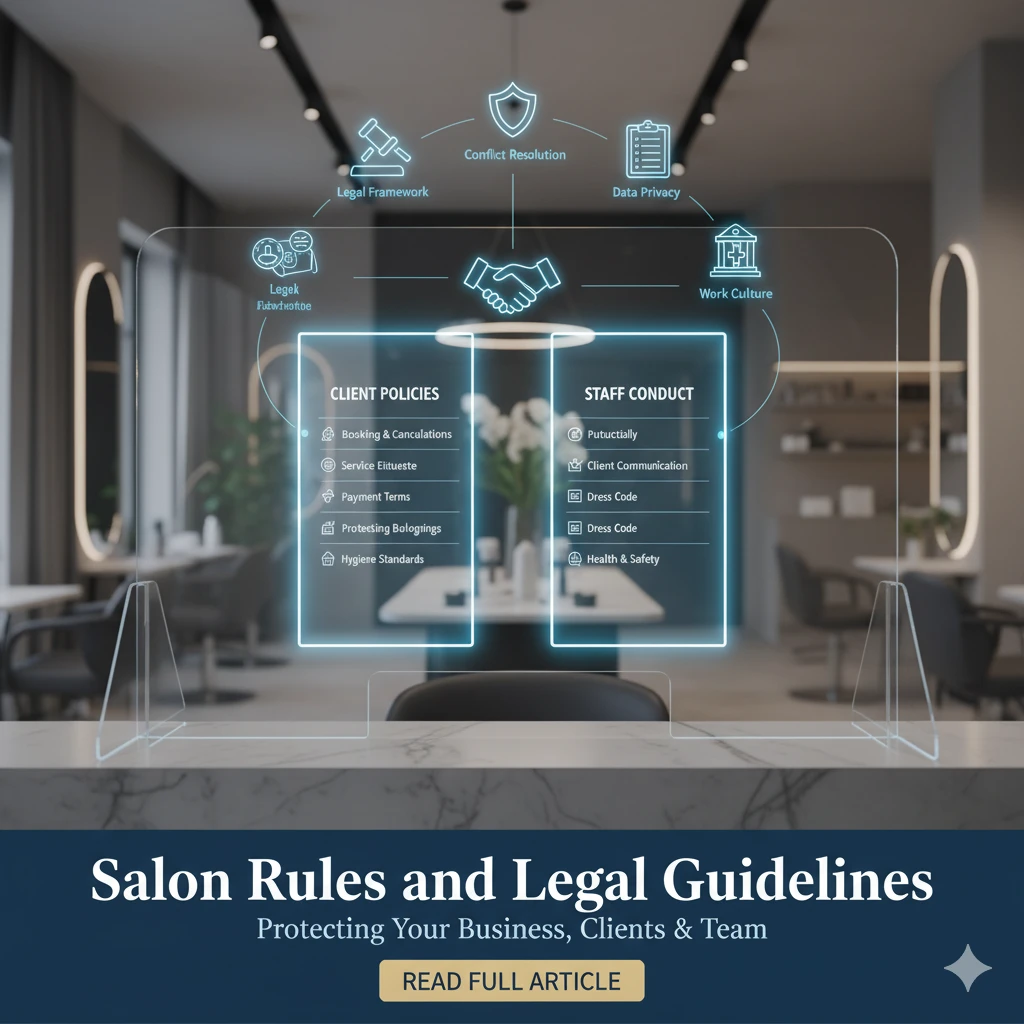
Managing a beauty salon means balancing creativity, service, and professionalism. Beyond offering great styles or relaxing treatments, salon owners must follow clear rules to protect their business from conflicts, misconduct, or legal risks. This article covers the golden guidelines for managing both clients and employees under proper legal and ethical standards.
1. Establish Clear Client Conduct Policies
Difficult clients are inevitable in any service industry. However, you have the right to maintain a safe, respectful environment for your team. Clearly outline acceptable behavior in your salon’s policy, displayed at the reception or on your website. If a client becomes abusive or refuses to pay, you can legally refuse service — but always document the incident professionally. According to the Federal Trade Commission (FTC), maintaining written service terms helps reduce disputes and strengthens your protection if issues arise.
Consider linking your salon’s rules to your online booking system or policy page. For instance, many salons list their conditions directly in the footer — similar to About or Contact pages — to ensure full transparency.
2. Handle Employee Misconduct with a Structured Approach
Employee behavior represents your brand. Late arrivals, unprofessional communication, or service errors can cost you clients and reputation. Set internal rules in writing — including attendance policies, dress code, client communication, and hygiene expectations.
If a staff member violates rules, follow a progressive discipline process:
- First warning (verbal)
- Written notice
- Final warning or termination if repeated
Keep a signed copy of each warning. The U.S. Department of Labor recommends proper documentation for every disciplinary action to prevent wrongful termination claims.
3. Comply with Local Health, Safety, and Licensing Laws
Hygiene and safety regulations are not optional — they’re a legal requirement. Most countries require salons to comply with OSHA Beauty Salon Standards, covering ventilation, chemical storage, and sanitation. Regularly inspect tools, disinfect workstations, and train your staff on proper waste disposal.
You can include these compliance notes on your website’s blog or policy page to demonstrate professionalism to clients and inspectors alike.
4. Manage Client Data Legally and Ethically
Collecting client names, emails, or photos must follow data protection laws such as the GDPR (General Data Protection Regulation) or your region’s equivalent. Avoid storing data on unsecured devices, and always obtain consent for photos or marketing use.
On your salon’s website — perhaps under How to Use — include a short privacy statement explaining how you handle client information.
5. Create a Legal Incident Response Plan
Even with solid rules, accidents or disputes may occur — a burn from a treatment, product allergy, or damaged item. Keep an incident logbook where staff record details immediately. The U.S. Small Business Administration advises maintaining insurance that covers both general liability and professional mistakes.
Having a proper plan and insurance coverage ensures you respond legally and calmly if any problem arises. You can discuss these policies in your team training sessions or display a summary internally next to your service policy.
6. Foster a Respectful and Positive Work Culture
A salon’s reputation thrives on how clients and employees feel. Encourage open communication, regular meetings, and constructive feedback. Treat mistakes as learning opportunities — not punishments. According to Harvard Business Review, workplaces with respectful cultures see 26% fewer staff turnovers.
You can also create internal guides, share them on your affiliate or staff portal pages, and update them annually.
Final Thoughts
Running a salon successfully requires more than creativity — it requires structure, clarity, and fairness. By setting professional rules for clients and employees, staying compliant with laws, and handling disputes calmly, you build a business that stands strong in every situation.
Want to keep learning? Explore more insights on the QuarkBooker Blog for guides and strategies tailored to salon success.