
Salon Scaling 2026: Why Digital CX Outranks Decor
QuarkBooker Team
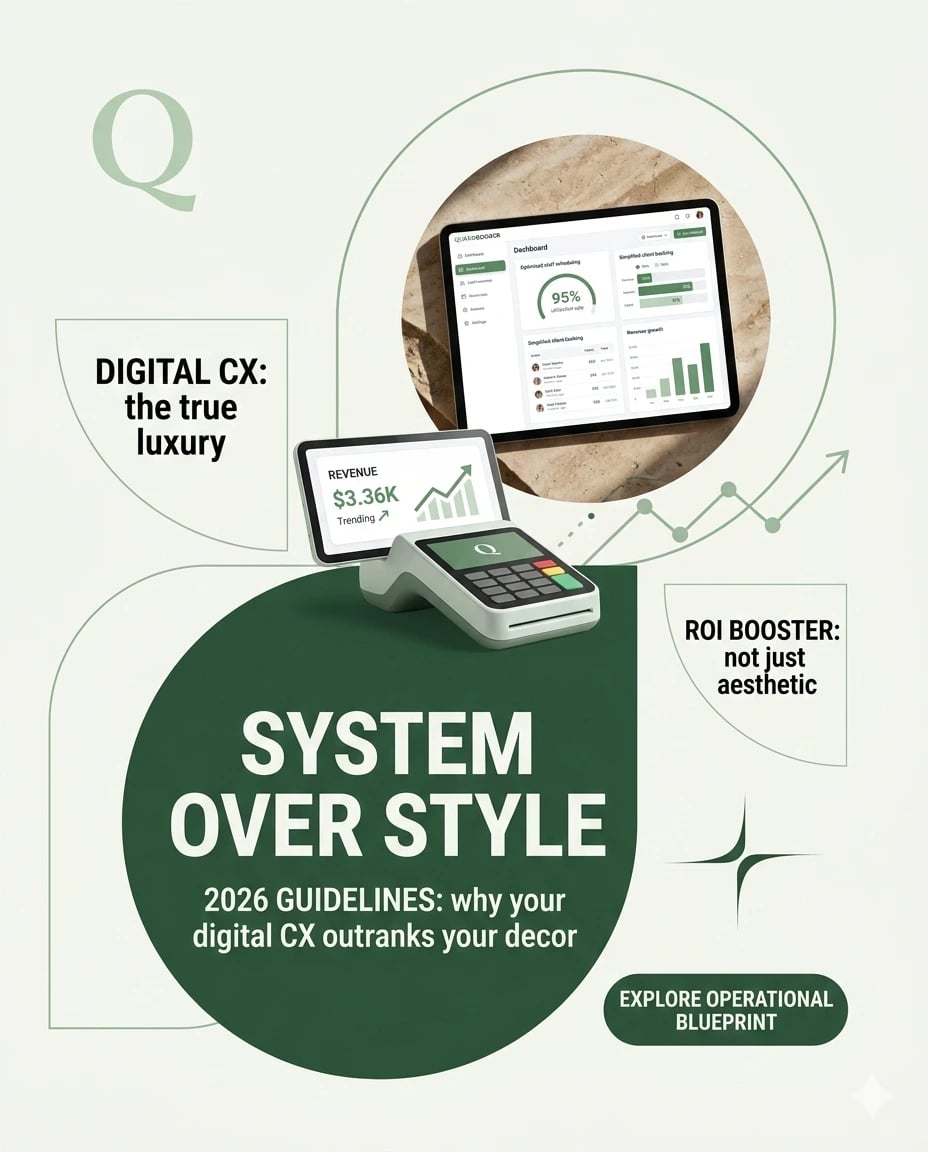
In 2026, the beauty industry is unrecognizable from a decade ago. It’s no longer enough to have the most Instagrammable space in town. The definition of luxury has shifted.
The old playbook was simple: spend your entire budget on high-end chandeliers and velvet chairs. Today, those are table stakes. Your true competitor is not the boutique salon down the street; it is the personalized, effortless digital experience your clients get from Netflix, Uber, and their favorite retailers.
If you are planning to scale your salon business in 2026, the data is clear: Investing in your digital ecosystem is far more important for growth than refreshing your decor.
1. Visibility & The "Local Authority" Trap
Scaling starts with visibility. If new clients can't find you at the exact moment they need a solution, your interior design is irrelevant.
- Google "Answer Engine" Optimization (AEO): In 2026, traditional search results are secondary. Most clients find you through AI-powered summary boxes. According to latest Search Engine Journal insights, structured data is now the primary way local businesses appear in AI-driven "Near Me" queries.
- The Scaling Impact: Investment here directly translates to automatic, consistent, new client acquisition without increasing your manual marketing effort.
2. Seamless Booking – The End of Friction
When a potential client finds you, the next 30 seconds are critical. Friction is a profit killer.
- 2026 Consumer Expectations: Today’s consumer considers it an unacceptable barrier to have to call a salon. As highlighted by Forbes on Small Business Tech Trends, "invisible" tech—systems that work behind the scenes to save the user time—is the top driver for Gen Z and Millennial brand loyalty.
- The Scaling Impact: Cloud-based booking captures demand instantly, reducing your need for front-desk staff and increasing scheduling efficiency to 95%+ utilization.
3. Revenue & Retention Outside of the Chair
The old model relies on the physically limited, one-on-one service hour. Scaling requires breaking that dependency and looking at financial management for salon owners through a digital lens.
- Digital Retail Storefronts: In 2026, clients want to buy the professional products they just used via their booking app. Integrating e-commerce into your service model can increase your salon retail profit margins by up to 30%.
- External Insight: Research from McKinsey & Company suggests that "phygital" (physical + digital) retail experiences are the only way for local service businesses to compete with global e-commerce giants.
4. Team Operations – Deciding Who to Hire
Your team is your engine, but your operational system is the steering wheel. As you scale, manual systems will collapse under the weight of more staff.
- The Systems Blueprint: Before hiring your 10th stylist, you must have a salon operations checklist that runs on autopilot.
- Legal & HR Standards: Scaling requires professional-grade documentation. The Professional Beauty Association (PBA) emphasizes that as salons scale, digital tracking of staff performance and clear digital contracts are essential for avoiding labor disputes and maintaining a high-performance salon team.
5. Prioritizing the "Digital Handshake"
Your website and booking flow are the "Digital Handshake"—the first time a client touches your brand.
- User Experience (UX) Matters: A beautiful salon with a slow, broken website feels like a luxury car with a flat tire. Reviewing current Smashing Magazine UX standards shows that mobile-first design isn't just a trend; it's a requirement for SEO indexing in 2026.
- The Verdict: Put 80% of your growth budget into your digital infrastructure and 20% into your physical decor.
The Bottom Line
Building a prestigious salon brand that can scale means focusing on what your clients value most. They assume the physical space will be nice. What they actually want is to feel known and for the entire transaction to be effortless.
Ready to build your digital infrastructure? See how QuarkBooker provides the key criteria for choosing salon booking software to help you scale without the stress.