Salon Staff Turnover: 5 Operational Fixes to Retain Talent
QuarkBooker Team
Salon Staff Turnover: The Operational Mistakes That Push Talent Away
High staff turnover is often blamed on the market, "the new generation," or aggressive competition. But inside most salons, the real cause is less visible—and much more fixable.
Turnover is rarely just about people. It is about how the salon is operated day to day. When systems are unclear and scheduling feels chaotic, even the most loyal staff will eventually look for a more stable environment. Professional salons don’t eliminate turnover entirely, but they reduce it dramatically by fixing operational weak points before they become "people problems."
1. The Pattern Most Owners Miss
When one employee leaves, it might be personal. When several leave over time, it is structural. Common hidden signals of a structural problem include:
- Expectations that change without documentation.
- Schedules that shift unpredictably.
- Pay logic that feels negotiable rather than fixed.
- Policies that depend on the owner's mood.
Workplace retention studies from Gallup show that predictability and fairness matter more to employee retention than perks alone. In a salon, predictability comes from systems—not intentions.
2. The Stress of Informal Coordination
Many salons run on "informal coordination": bookings via DM, schedule edits by group chat, and rules explained only verbally. While this works for a team of two, it breaks quickly as you grow.
From an operations perspective, informal systems create high cognitive load and burnout. Research from MIT Sloan Management Review highlights that process variability increases employee exhaustion. Talented professionals prefer environments where the structure carries the weight, not constant improvisation.
3. Compensation Confusion: The Quiet Exit Trigger
One of the most underestimated drivers of turnover is not necessarily low pay, but unclear pay. When commission rules shift or bonuses are decided "case-by-case," trust erodes.
According to policy guidance from SHRM, perceived pay fairness and transparency are the primary retention factors in skill-based roles. Professional salons document their compensation logic to remove negotiation stress and protect the owner-stylist relationship.
4. Schedule Disorder is a Talent Killer
Staff rarely quit because of one long day; they quit because every week feels uncertain. High-maturity salons standardize their operations to avoid last-minute edits and overlapping bookings.
They rely on system-based salon scheduling rather than manual coordination to ensure:
- Fixed service durations.
- Automated booking buffers.
- Visible, fair workload distribution.
5. Why Verbal Rules Don’t Scale
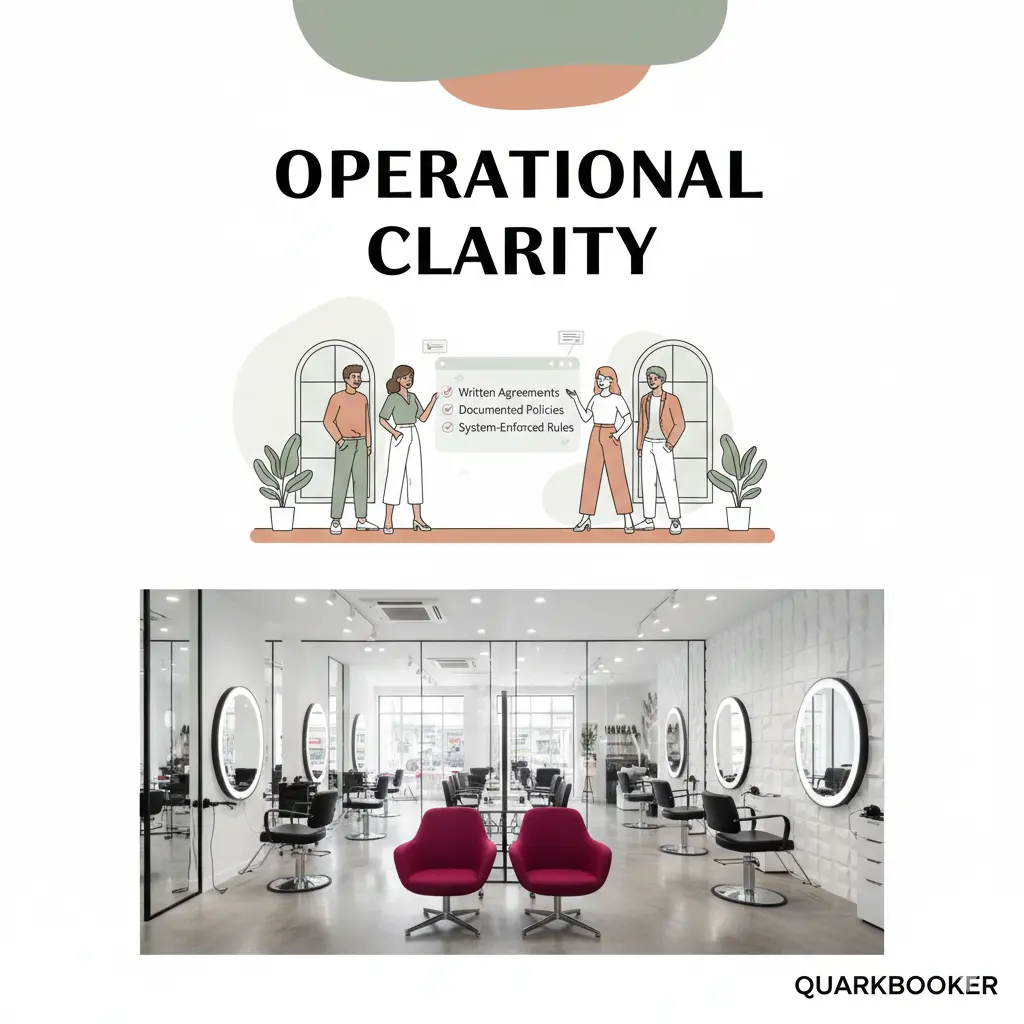
Managing staff expectations verbally is a major operational risk. Over time, interpretations drift and enforcement feels inconsistent. Documentation protects your culture; it doesn’t damage it.
Indeed Employer Resources consistently recommend written standards to reduce workplace disputes. To understand why this is critical for high-end environments, read our guide on why professional salons avoid verbal staff agreements.
6. Breaking the Owner Bottleneck
If every decision—from pricing exceptions to booking fixes—must flow through the owner, the salon becomes fragile. This "owner bottleneck" slows down operations and creates friction for the staff.
Advanced salons move from owner-driven control to system-driven control. This shift is why many luxury brands eventually outgrow basic booking software and move toward more robust operational infrastructure.
The Bottom Line: Engineering Retention
Retention is built into your operations, not just your HR. When an environment is predictable, fair, and structured, talented professionals stay longer and perform better.
Top-tier salons build disciplined, motivated teams through structure, not pressure.
If you are ready to move from reactive management toward scalable, structured operations: