
Why Most Salons Struggle to Scale After 3 Staff Members
QuarkBooker Team
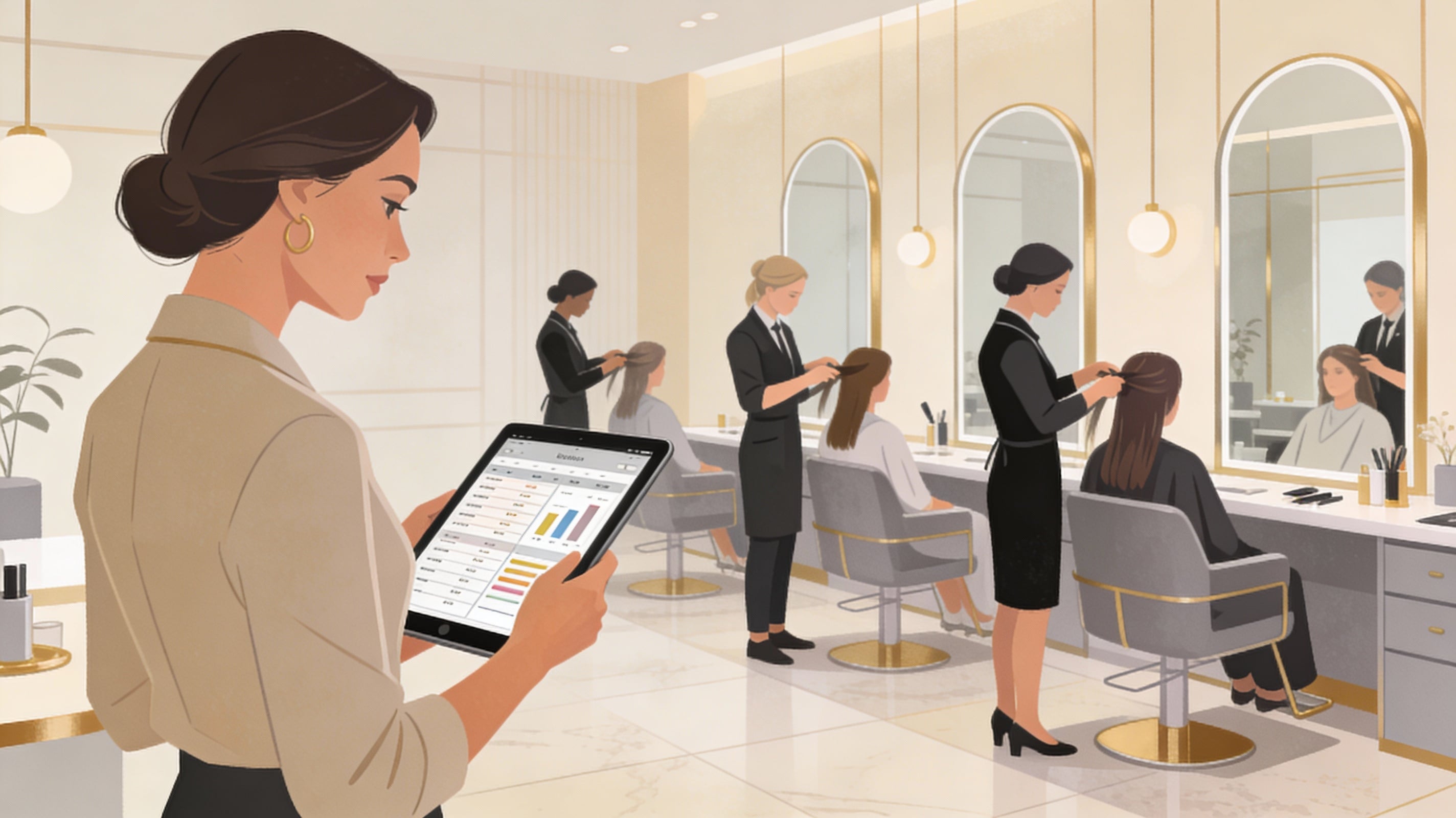
Many salon owners don’t have a growth problem — they have a systems problem.
Headline and hook
From Busy To Scalable: How Smart Salons Grow Beyond 3–5 Staff Without Chaos
Most salons hit a wall around 3–5 team members — not because demand dries up, but because the old way of running things collapses under the weight of schedules, staff, and client expectations. The salons that keep growing look less like “creative chaos” and more like calm software‑powered operations.
Why growth stalls after 3–5 staff
When you’re solo or working as a duo, you can run the whole salon out of your head: you remember who’s coming in, you tweak the day on the fly, and you personally fix problems before clients feel them. Once you hire your third or fourth team member, that invisible system breaks.
At that point you start to see:
- Overlapping schedules and double bookings.
- Constant back‑and‑forth on WhatsApp or Instagram DMs.
- Confusion over who owns what tasks.
- A growing gap between the “premium” brand you promise and the experience you actually deliver.
The core issue: the owner is still the system — and human systems do not scale..
The root problem: owner‑dependent operations
Most growing salons still run on:
- Manual booking and message‑based scheduling.
- Verbal policies (“just let me know next time”).
- Informal task‑sharing (“you take the phone today”).
- Owner memory as the final source of truth.
This works for a tiny team, but collapses as complexity increases. When everything depends on the owner’s attention, the owner becomes the bottleneck, and the salon can’t grow beyond that person’s capacity.
High‑performing salons flip this: they embed their rules, standards, and logic into systems — especially into their booking and operations platform — so the business can run consistently without constant intervention.
👉 See how luxury salons outgrow “basic” booking tools: Luxury Salon Booking Software: What Tools Get Wrong (QuarkBooker blog).
Fix 1: standardize scheduling like a pro platform
Unstructured scheduling is one of the fastest ways to burn out a growing team. It shows up as double bookings, chaotic days, and friction between staff who feel their time isn’t respected. thesalonbusiness
A scalable scheduling system:
- Assigns clear, standardized durations to every service.
- Builds in buffer time based on complexity, not guesswork.
- Automates availability and prevents overlapping appointments.
- Gives clients real‑time booking that respects your rules, not theirs.[
- quarkbooker
- ]
Modern salon platforms for premium environments are designed to enforce this structure quietly in the background, so the owner is no longer acting as a human scheduler.[
]
Fix 2: define roles, responsibilities, and accountability
In small teams, it’s tempting to “share” everything: one day someone answers messages, the next day someone else does, and tasks fall through the cracks. That informality feels flexible — until the business grows.
Professional salons behave more like SaaS‑driven teams:
- Clear roles for front desk, stylists, assistants, and managers.
- Written responsibilities instead of assumptions or memory.
- Accountability built into systems (who handled which booking, who followed up, who closed the day).
When expectations are documented and visible, staff don’t guess — they execute.
Fix 3: use software to enforce rules automatically
Manual rule enforcement doesn’t scale; systems do. High‑end salons increasingly rely on specialized booking and management software that encodes rules instead of asking humans to remember them.
Well‑designed salon software can:
- Enforce default time blocks and service logic.
- Apply no‑show and cancellation policies automatically.
- Assign staff based on availability and rules you set.
- Track performance and utilization without extra admin.
Platforms built for premium and luxury salons focus on structure, control, and client experience — not just “more features.”
👉 Explore a platform built for disciplined, high‑end operations: QuarkBooker app (app.quarkbooker.com).
Fix 4: build accountability without micromanagement
Most staff issues aren’t about attitude; they’re about unclear rules and emotional enforcement. When expectations are verbal and inconsistent, every correction feels personal.
High‑growth salons:
- Document operational standards and service rules.
- Let systems (not mood) handle reminders, timing, and limits.
- Train once, then let the process run instead of constant supervising.
This makes discipline feel natural rather than punitive, which is how strong, motivated teams are built in premium environments.
👉 Read more on building disciplined, motivated salon teams on the QuarkBooker blog.
Fix 5: measure what actually drives growth
Once a salon grows, intuition isn’t enough; you might “feel” busy yet still leak profit through gaps in scheduling, service mix, or retention.thesalonbusiness
Data‑driven salons track:
- Booking patterns and peak vs slow hours.
- Staff utilization and capacity.
- Revenue per service and per hour.
- Client retention and rebooking rates.
Modern salon platforms surface these numbers in dashboards so owners can adjust schedules, offers, and staffing based on evidence — not guesswork.
Why systems matter more than headcount
Hiring more people onto a broken system only scales stress. Premium salons that protect their brand understand that software and structure come first:
- Systems protect standards when the owner isn’t in the room.
- Structured booking protects staff focus and client experience.
- Clear rules make discipline feel professional, not personal.
Research in service operations shows that system‑led businesses outperform manual ones in both profitability and customer satisfaction — especially in premium markets.
Can you grow without software?
If you’re still relying on:
- Manual booking and message threads.
- WhatsApp as your “operations system.”
- Memory and last‑minute edits by the owner.
…you might be expanding, but you’re not truly scaling. Complexity will eventually outgrow human coordination. news.simplybook
If you’re ready to systemize
The salons that move cleanly beyond 3–5 staff tend to be the ones that:
- Standardize scheduling instead of improvising.
- Define roles and responsibilities in writing.
- Use software to enforce rules and policies.
- Measure performance instead of relying on impressions.
- Reduce owner dependency by making systems the source of truth.[
- thesalonbusiness
If you want structure that supports modern scaling without constant micromanagement, it’s worth exploring a platform built specifically for professional salons.
👉 Start with QuarkBooker (app.quarkbooker.com) for structured, premium‑grade salon operations
For deeper operational insights and support:
- How top salons build disciplined, motivated teams
- Best software for premium and luxury salons
- Contact the QuarkBooker team for tailored guidance via their contact page.[
- quarkbooker
- ]