
How to Set Salon Rules Without Creating Staff Tension
QuarkBooker Team
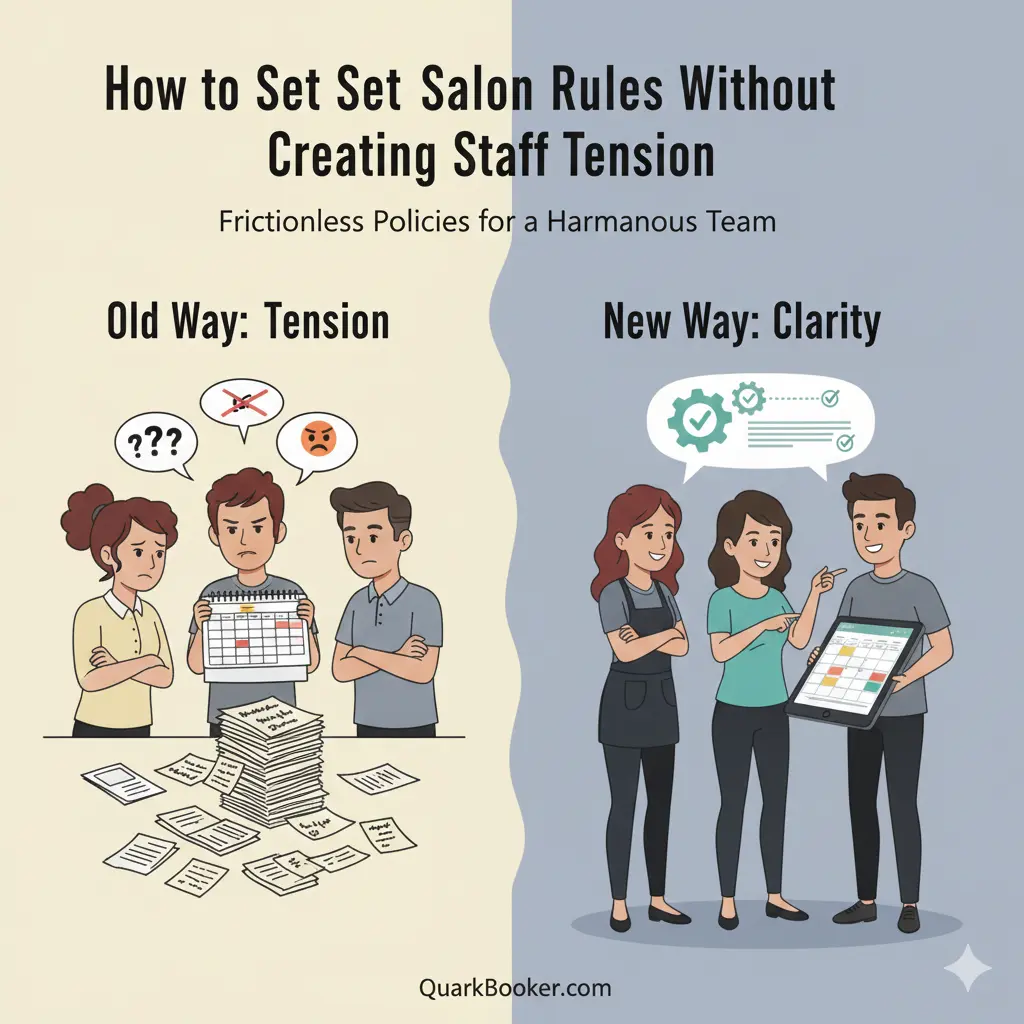
In most salons, tension doesn’t come from rules.
It comes from unclear expectations.
When rules are informal, emotional, or inconsistently applied, staff feel confused — and confusion always turns into friction. Research on workplace leadership consistently shows that unclear expectations are one of the main causes of internal conflict (Harvard Business Review).
The goal isn’t to add control.
The goal is to remove uncertainty.
This article explains how professional salon owners introduce rules that reduce stress instead of creating it.
Start With One Truth: People Hate Surprises
Staff tension often starts when:
- Rules appear suddenly
- Expectations change without warning
- Enforcement feels random
Professional salons do the opposite. They make rules predictable.
Before introducing any rule, answer this internally:
“Would this feel fair if I were hearing it for the first time?”
If the answer is no, the delivery — not the rule — needs work. Clear communication and fairness are core principles of healthy workplace policy design, especially in service-based teams (SHRM).
Rule Design Comes Before Rule Communication
Many owners announce rules before defining them properly.
Professional salons first define rules clearly:
- What exactly is expected
- When it applies
- What happens if it’s ignored
- Who it applies to (everyone)
Vague rules create arguments.
Clear rules end conversations.
Separate Structure From Emotion
Rules fail when they’re delivered emotionally:
- After a bad day
- During conflict
- In front of others
Professional salons introduce rules calmly, neutrally, and proactively — never as a reaction. Operational research shows that systems-driven environments reduce emotional friction and improve team alignment (McKinsey & Company).
This one change alone removes most staff resistance.
Use Systems to Carry the Rules
The fastest way to create tension is making yourself the rule enforcer.
Instead, professional salons:
- Let booking systems define availability
- Let schedules define working hours
- Let service structures define time and pricing
When rules live in systems, they feel objective — not personal.
👉 This is why organized salons rely on structured platforms instead of constant reminders.
Discover more operational insights in our
👉 /blog
Don’t Ask for Permission — Ask for Understanding
There’s a difference between leadership and negotiation.
Professional owners don’t ask:
“Is everyone okay with this rule?”
They ask:
“Does everyone understand why this rule exists?”
Understanding builds cooperation.
Negotiation weakens consistency.
Introduce Rules as Protection, Not Control
The most effective salon rules are framed as protection:
- Protecting schedules
- Protecting income
- Protecting fairness
- Protecting client experience
When staff see rules as protection, tension drops instantly.
Write Rules Once — Refer Back Calmly
Repeating rules verbally creates frustration on both sides.
Professional salons:
- Document rules clearly
- Share them once
- Refer back to them without emotion
This removes arguments and keeps relationships intact.
Consistency Is the Real Tension Killer
Nothing damages trust faster than:
- Exceptions
- Favorites
- Ignored rules
Consistency matters more than strictness.
A fair rule applied consistently creates less tension than a flexible rule applied randomly.
Structure Builds Respect — Not Distance
Rules don’t damage culture.
Unclear leadership does.
Clear expectations allow:
- Staff to relax
- Owners to step back
- The salon to scale calmly
Learn more about how we think about structure, leadership, and modern salon operations on our
👉 /about
Build Rules Into the Way You Operate
If your salon still depends on:
- Verbal instructions
- Memory
- Constant follow-ups
Tension will always exist.
Structure removes friction.
👉 Create calm, professional operations here: