At-Home vs. Salon Keratin: Which is Safer for Hair?
QuarkBooker Team
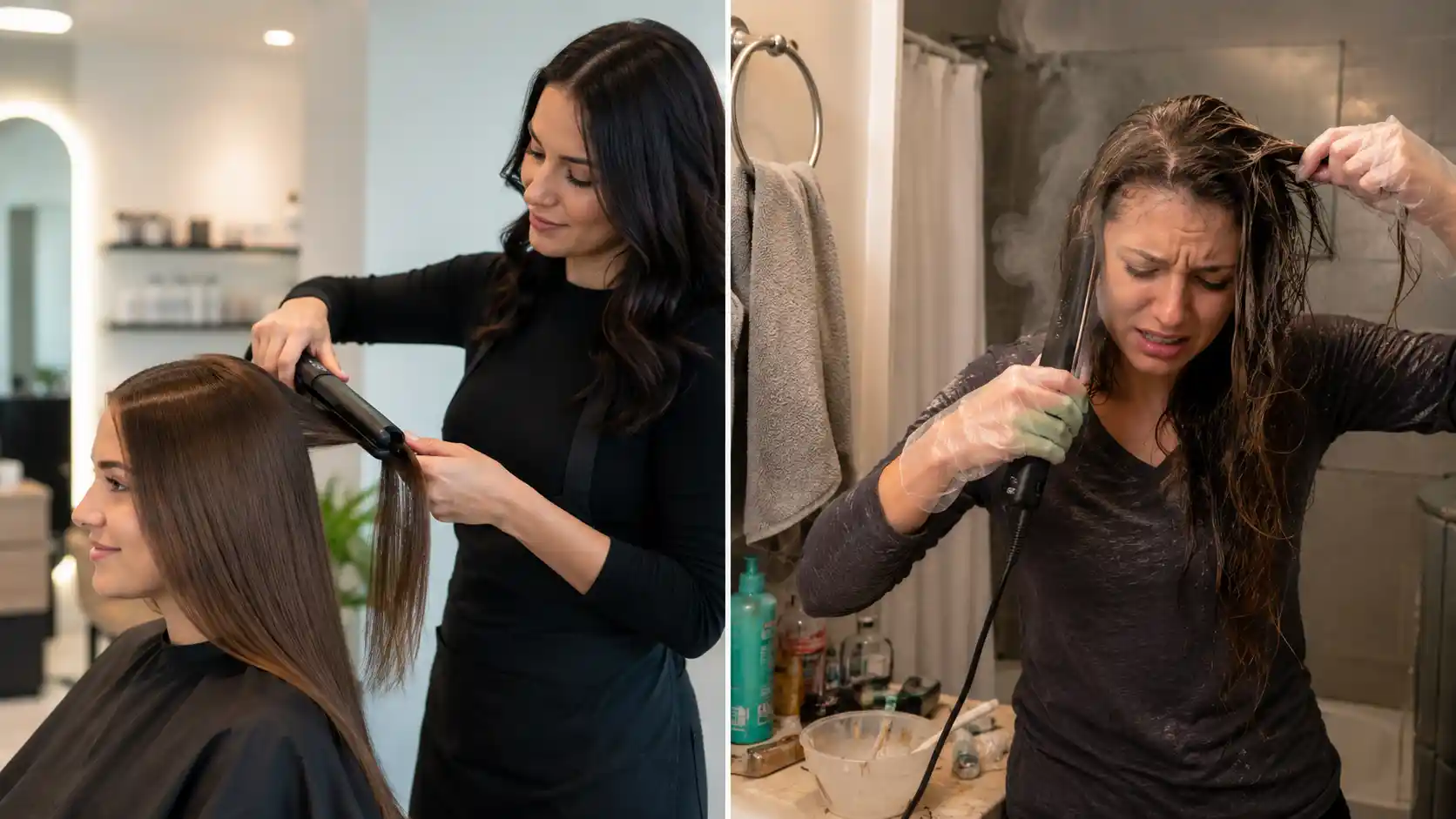
Salon keratin treatments are significantly safer and more effective than at-home kits due to professional-grade formulations, precise heat application, and expert ventilation. While DIY keratin kits promise quick, inexpensive results, they often contain unpredictable formaldehyde-releasing chemicals that risk severe hair damage, cuticle melting, and scalp burns when incorrectly applied. For salon owners, educating clients on the critical safety differences between professional application and boxed treatments is essential for building trust and ensuring long-term hair health.
The Rising Trend of DIY Hair Smoothing
As a salon owner, you have likely encountered clients sitting in your chair with compromised, brittle hair, asking for a color service or a trim. Upon consultation, they reveal they recently attempted an at-home keratin treatment.
The beauty market is flooded with over-the-counter smoothing systems promising frizz-free, glossy results for a fraction of a salon ticket. However, the reality of chemical hair manipulation is complex. When clients ask, "Is at-home vs. salon keratin actually safer for your hair?", the answer lies in the chemistry, the environment, and the expertise of the application.
Understanding the specific safety hazards of DIY kits equips you to guide your clients toward healthier choices and positions your salon as a trusted authority.
The Chemical Reality: Formulations and Safety Standards
The most significant safety discrepancy between at-home and professional keratin treatments lies in the chemical composition of the products.
Hidden Formaldehyde Releasers in DIY Kits
Professional salon products are subject to strict distributor vetting and ingredient transparency. Many modern salons have transitioned to safer, glyoxylic acid-based smoothing treatments or use highly regulated, low-fume traditional keratin.
Conversely, consumer-grade DIY kits often exploit labeling loopholes. To achieve dramatic smoothing results without professional techniques, these kits frequently rely on high concentrations of formaldehyde-releasing chemicals. As highlighted by the FDA's safety guidelines on hair smoothing products, ingredients like methylene glycol, formalin, and methanal release hazardous formaldehyde gas when exposed to the high heat of a flat iron.
- Professional advantage: Stylists are trained to read SDS (Safety Data Sheets) and understand the exact chemical payload they are applying.
- At-home risk: Consumers blindly apply chemicals without understanding their sensitization risks or chemical compatibility with previous hair color.
Environmental Safety and Ventilation
Air quality is a crucial safety factor. Professional salons are equipped with source-capture ventilation systems and high-grade HVAC setups designed to pull chemical vapors away from the breathing zone. The Occupational Safety and Health Administration (OSHA) mandates strict air quality standards for salons performing smoothing services.
When a client applies a chemical smoothing treatment in a small, poorly ventilated home bathroom, the concentration of toxic fumes can quickly reach dangerous levels, leading to respiratory irritation, eye burning, and nausea.
Heat, Technique, and Mechanical Damage
Even if an at-home kit contains a relatively safe, formaldehyde-free formula, the application process itself introduces severe risks of mechanical and thermal damage.
The Danger of Indiscriminate Heat
Keratin treatments require heat to cross-link the protein bonds and seal the cuticle. This typically involves passing a flat iron heated to 400°F–450°F over small sections of hair multiple times.
- The Professional Approach: A licensed stylist assesses the hair's porosity, density, and elasticity. They adjust the flat iron temperature dynamically—using lower heat on fragile, pre-lightened ends and higher heat on resistant, virgin roots.
- The DIY Disaster: Consumers generally lack the technical ability to assess hair porosity. They often set their consumer-grade flat irons to the maximum temperature and repeatedly iron the same sections, effectively melting the keratin protein and causing irreversible structural damage. Research published in the Journal of Cosmetic Science frequently notes that excessive thermal styling over 400°F significantly degrades hair tryptophan and tensile strength.
Sectioning and Overlap
Proper application requires meticulous sectioning. Stylists ensure the product is applied evenly without saturating the scalp, which can cause chemical burns or contact dermatitis. DIY users almost always overlap the product, missing the nape of the neck while oversaturating the front sections, leading to patchy, uneven results and localized breakage.
How to Educate Clients Without Alienating Them
When a client asks about at-home keratin, the goal is not to shame them for seeking a budget-friendly option, but to educate them on the hidden costs of chemical damage.
The Value of the Consultation
Use the consultation to build a barrier of trust. Ask specific questions about their hair history. If you are operating a smaller studio or transitioning your business model, you understand the importance of creating a professional, trustworthy environment. (For insights on optimizing different business models, read our guide on the home salon setups vs. salon studios).
Key talking points for your stylists:
- Analyze the hair strand: Physically show the client their split ends or porosity variations. Explain why their specific hair type requires a customized temperature that a box kit cannot provide.
- Discuss the long-term cost: Explain that fixing a botched at-home chemical service often requires extensive color correction, bond-building treatments, and multiple haircuts, which costs far more than booking a professional keratin treatment initially.
- Highlight your salon's safety protocols: Talk about your ventilation, your premium product lines, and your commitment to their systemic health.
Balancing Time and Personalization
Performing a high-quality keratin service requires dedicated time and undivided attention. This level of customized care is exactly why clients return to professionals. Managing these lengthy appointments efficiently without making the client feel rushed is an art form. Mastering the personal touch in salon services and time management allows you to execute these premium services profitably while delivering a relaxing, luxury experience that no DIY box can replicate.
Addressing the "Keratin Alternative" Trend
Many clients turn to DIY keratin because they are afraid of the commitment or the chemicals of a traditional salon service. As a modern salon owner, you can capture this demographic by offering safer, professional alternatives.
- Amino Acid Smoothing Treatments: Offer treatments based on silk proteins and amino acids that reduce frizz without breaking the hair's disulfide bonds.
- In-Salon Deep Conditioning Glosses: For clients who just want shine, offer a clear gloss mixed with a bond multiplier.
- Express Keratin Blowouts: Provide a 4-week express smoothing service that costs less than a full keratin treatment, capturing the budget-conscious client who might otherwise buy a drugstore kit.
By diversifying your service menu, you remove the client's need to seek out risky at-home alternatives.
Frequently Asked Questions (FAQ)
Is at-home keratin as effective as salon keratin?
No. At-home keratin kits generally offer superficial, short-term smoothing that washes out in a few weeks. Professional salon keratin penetrates deeper into the hair cuticle, offering customized, frizz-free results that can last anywhere from three to six months depending on the formula.
Can at-home keratin treatments cause hair loss?
Yes. Improper application of at-home keratin can cause chemical burns to the scalp, leading to temporary or permanent follicular damage. Additionally, overlapping chemicals and applying excessive heat with a flat iron causes severe breakage at the root, mimicking hair loss.
Are there safe formaldehyde-free keratin treatments?
Yes, many professional salon brands now offer safe, formaldehyde-free alternatives that use glyoxylic acid or amino acid blends to smooth the hair. However, many at-home kits labeled "formaldehyde-free" still contain chemical precursors that release toxic gases when heated.
How do I fix hair damaged by an at-home keratin kit?
Damaged hair cannot be chemically reversed, but it can be managed. You must stop all heat styling immediately, switch to professional bond-building treatments (like Olaplex or K18), use sulfate-free moisture masks, and schedule regular micro-trims with your stylist to remove the compromised ends.
Why is salon keratin so much more expensive?
You are paying for chemical safety, professional expertise, and premium ingredients. The cost covers a licensed stylist’s ability to assess hair porosity, regulate heat safely, ensure proper ventilation, and apply high-grade formulas that protect the structural integrity of your hair.
Conclusion: Protecting Your Clients and Your Business
When it comes to the debate of at-home vs. salon keratin, the verdict is absolute: professional salon application is vastly safer, more effective, and better for the long-term health of the hair. DIY chemical kits present too many uncontrollable variables—from hidden toxic ingredients to the severe risk of thermal damage.
As a salon owner, your greatest asset is your expertise. By educating your clients on the chemistry and mechanics behind smoothing treatments, you elevate your brand from a simple service provider to a trusted hair health authority. If you have questions about implementing new smoothing services or want to discuss strategies for your salon, feel free to contact our team.
Streamline Your Salon's Premium Services
Offering high-ticket services like keratin treatments requires precise scheduling and zero missed appointments. Modern salons rely on powerful booking and management platforms to automate their operations, take deposits, and drastically reduce no-shows.
Ready to elevate your salon's efficiency and secure your bookings?
Start optimizing your salon management today.